Contact
SMICON
Peelstraat 5a
5446 NA Wanroij
The Netherlands
 +31 (0)485 45 33 96
 info@smicon.nl
SMICON
Peelstraat 5a
5446 NA Wanroij
The Netherlands
+31 (0)485 45 33 96
info@smicon.nl


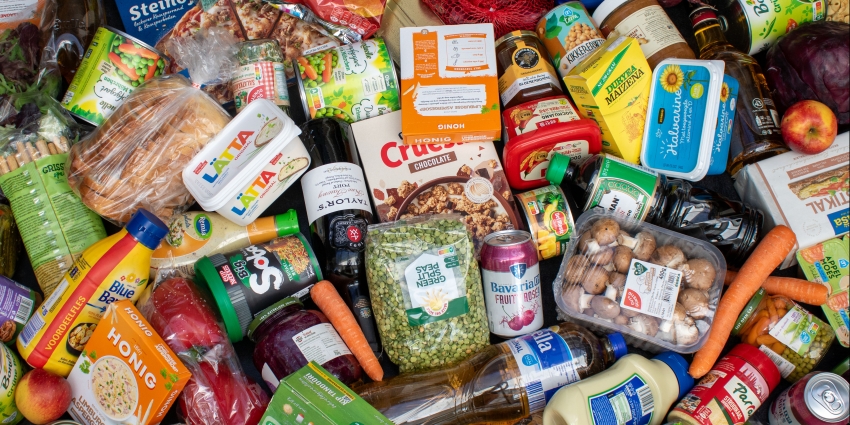
Every year, over 58 million tonnes of food waste is generated in the EU. Households are responsible for more than 50% of the waste. (Eurostat, 2025) But food waste is not the end of the production chain. Depending on its composition, food waste can be processed into valuable resources such as biogas, animal feed, compost or other organic products.
Food waste recycling is the process of recovering value from food that is no longer intended for human consumption. Instead of sending food waste to landfill or incineration, the organic material can be processed and reused as a resource.
Food waste can come from food manufacturers, supermarkets, distribution centres, restaurants, agriculture and households. Depending on the type of waste, it can contain valuable organic material but may also include packaging, or other unwanted materials.
The first step is therefore often to separate the valuable organic fraction from contaminants. Technologies such as depackaging, separation and dewatering can prepare food waste for further processing.
Food becomes waste when it is discarded or intended to be discarded. This can happen at different stages of the food supply chain. Examples include:
Importantly, food waste does not necessarily mean that the material has no value. A product that can no longer be sold as food may still be a valuable feedstock for anaerobic digestion, animal feed or composting, depending on legislation and composition. For businesses, the challenge is to find the highest-value and most appropriate destination for each waste stream.
Food waste legislation differs between countries and determines how food waste can be collected, transported and processed, as well as what the recovered material can be used for.
European legislation increasingly focuses on waste prevention, separate collection, recycling and resource recovery. Requirements can also apply to packaging, animal by-products, digestate and the use of processed food waste as animal feed. For businesses handling food waste, this means that the preferred processing route depends not only on the material itself, but also on local legislation and the intended end use. We have several articles about legislation in different parts of the world.
Before investing in a food waste recycling process, companies should therefore assess:
Anaerobic digestion (AD) converts biodegradable organic material into biogas and digestate. This makes food waste an attractive feedstock for biogas plants.
Packaged food waste can first be depackaged to remove plastic and other contaminants. The recovered organic fraction can then be fed into an anaerobic digester.
The basic process
Food waste → Depackaging → Organic fraction → Anaerobic digestion → Biogas + digestate
The quality of the feedstock is important. Excessive packaging contamination can cause operational problems and reduce the quality of the digestate. Efficient depackaging therefore plays an important role in preparing food waste for anaerobic digestion.
Smicon's depackaging and separation technologies are designed to recover valuable organic material while achieving a clean organic output of 99,9% suitable for biogas production. Since July 2026, digestate may contain a maximum of 2.5 grams of plastic particles larger than 2 mm per kilogram of dry matter. Smicon machines can meet this standard.
Some food products that are no longer suitable for human consumption can be processed into animal feed, provided they meet applicable legislation and quality requirements.
Food processing and fresh produce industries generate valuable organic side streams such as bakery products, fruit and vegetable rejects, surplus, peelings and other cutting residues that still contain many nutrients. Instead of sending these materials to disposal, suitable streams can be used as a substrate for animal feed or insect farming, for example for black soldier fly larvae.
Depending on the characteristics of the stream, grinding or shredding can be used to reduce particle size and create a more consistent feedstock that is suitable for animals to digest.
Composting converts biodegradable organic material into a stable, nutrient-rich material that can be returned to soil. Food waste can be suitable for composting when it meets the requirements of the relevant composting process and legislation. The material may contain a maximum of 0.5% impurities larger than 2 mm, measured based on the dry matter.